Passata è la tempesta
Fab’s Friday Field Notes, 12 October 2026
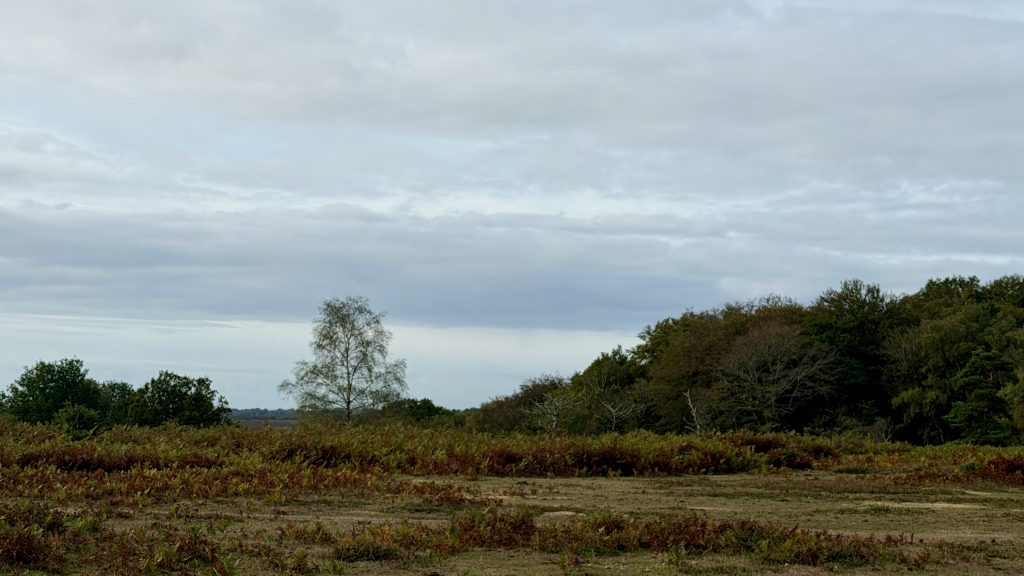
Sunday, a few minutes after the finish of the second CC6 cross-country race of the season, at Ocknell in the New Forest. Joy and peace.
The chest settled, the field came back into focus, and for a while there was nothing in my head at all. I know that silence. I have found it at the top of long ski tours in the Bergamasque Alps and at the end of hard days on the bike.
Cross-country gets you there faster: 7.4 km of hills, 36 minutes spent just over the limit, and the account is settled. Nothing left over to worry about.
Leopardi was less romantic about it
Two poems came to mind on that field, the two every Italian learns at school. La quiete dopo la tempesta opens with the storm already gone, birds singing again, the street waking up. Il sabato del villaggio is about the eve of the holiday, when the festa is still ahead and therefore still perfect.
What school tends to skip is how hard Leopardi is on both moments. The calm after the storm is piacer figlio d’affanno, pleasure born of distress. Uscir di pena / è diletto fra noi: getting out of pain is what passes for delight among us.
Saturday fares no better. It is the best day of the seven only because Sunday has not arrived, and Sunday’s hours bring tristezza e noia and the usual labour.
I think he is right about the mechanics and wrong about the conclusion. What I felt on Sunday was relief, nothing grander. The difference is that I chose the storm.
Thirty-six minutes of hurting on purpose bought a few hours with the background noise switched off. A Sunday that still felt like a Saturday, because Monday could not reach me yet.
What the body is actually doing
I went looking for the science afterwards, and most of what circulates is half right. Endorphins still get the credit. Yet in a 2021 trial, runners given an opioid blocker reported their high just as often as those on placebo.
The stronger candidates now are endocannabinoids, the body’s own cannabis-like molecules. The best known is anandamide, named after the Sanskrit ananda, bliss. The researchers themselves stop short of calling it proven, which I find more convincing than certainty.
Then the vagus nerve takes over. Once you stop, it pulls the heart rate down fast. Cortisol stays high for a while after a hard effort, so the calm arrives with the stress hormones still in the blood. The nervous system settles first and the chemistry catches up later.
The simplest version is the one I trust most. One physical stress the body knows how to resolve replaces a week of small mental ones it does not.
The rest of the week, at a lower volume
The cross-country was the loud part of the week. The rest was quieter.
A couple of sessions at Parthian with Paul, John and Amelie: several 6bs and 6cs. Still not pushing, and feeling ready to climb harder.
A few walks in the New Forest and around Winchester. Walking after a race is a different discipline: nothing to pay back, no limit to find.
Into next week
I do not want to turn a muddy field into a lesson about work. One thing does carry over, though. The heavy weeks are the ones with a hundred small open loops; the clear ones are those where I committed fully to one hard thing and finished it.
Leopardi would say I am only enjoying the absence of pain. He may be right. I will take it anyway, and go and earn it again at Race 4.
Sources: Siebers et al. 2021, Psychoneuroendocrinology · University of Duisburg-Essen, September 2026 · ScienceBlog overview, incl. the 2017 PET study